Tofu
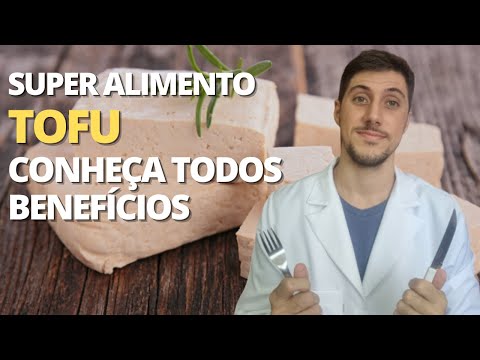
Tofu or bean curd is a food prepared by pressing the curds of coagulated soy milk into solid white blocks of varying softness: 'silken', 'soft', 'firm', and 'extra firm'.
Imagem: [puamelia] · BY-SA · Openverse
The English word "tofu" comes from Japanese tōfu (豆腐, see below), which in turn borrows Chinese 豆腐 (Mandarin: dòufǔ or tòufu) 'bean ferment'. The earliest documentation of the word in English is in the 1704 translation of Domingo Fernández Navarrete's A Collection of Voyages and Travels, that describes how tofu was made. The word towfu also appears in a 1770 letter from the English merchant James Flint to Benjamin Franklin.: 73 The term "bean curd(s)" for tofu has been used in the United States since at least 1840.
Imagem: avlxyz · BY-SA · Openverse
Tofu making was first recorded during the Chinese Han dynasty. Chinese legend ascribes its invention to Prince Liu An (179–122 BC) of Anhui province. Tofu and its production technique were introduced to Japan during the Nara period (710–794) but there are no clear records; tofu first appeared on record in AD 965. Some scholars believe tofu arrived in Vietnam during the 10th and 11th centuries..mw-parser-output cite.citation{font-style:inherit;word-wrap:break-word}.mw-parser-output .citation q{quotes:"\"""\"""'""'"}.mw-parser-output .citation:target{background-color:rgba(0,127,255,0.133)}.mw-parser-output .id-lock-free.id-lock-free a{background:url("//upload.wikimedia.org/wikipedia/commons/6/65/Lock-green.svg")right 0.1em center/9px no-repeat}.mw-parser-output .id-lock-limited.id-lock-limited a,.mw-parser-output .id-lock-registration.id-lock-registration a{background:url("//upload.wikimedia.org/wikipedia/commons/d/d6/Lock-gray-alt-2.svg")right 0.1em center/9px no-repeat}.mw-parser-output .id-lock-subscription.id-lock-subscription a{background:url("//upload.wikimedia.org/wikipedia/commons/a/aa/Lock-red-alt-2.svg")right 0.1em center/9px no-repeat}.mw-parser-output .cs1-ws-icon a{background:url("//upload.wikimedia.org/wikipedia/commons/4/4c/Wikisource-logo.svg")right 0.1em center/12px no-repeat}body:not(.skin-timeless):not(.skin-minerva) .mw-parser-output .id-lock-free a,body:not(.skin-timeless):not(.skin-minerva) .mw-parser-output .id-lock-limited a,body:not(.skin-timeless):not(.skin-minerva) .mw-parser-output .id-lock-registration a,body:not(.skin-timeless):not(.skin-minerva) .mw-parser-output .id-lock-subscription a,body:not(.skin-timeless):not(.skin-minerva) .mw-parser-output .cs1-ws-icon a{background-size:contain;padding:0 1em 0 0}.mw-parser-output .cs1-code{color:inherit;background:inherit;border:none;padding:inherit}.mw-parser-output .cs1-hidden-error{display:none;color:var(--color-error,#bf3c2c)}.mw-parser-output .cs1-visible-error{color:var(--color-error,#bf3c2c)}.mw-parser-output .cs1-maint{display:none;color:#085;margin-left:0.3em}.mw-parser-output .cs1-kern-left{padding-left:0.2em}.mw-parser-output .cs1-kern-right{padding-right:0.2em}.mw-parser-output .citation .mw-selflink{font-weight:inherit}@media screen{.mw-parser-output .cs1-format{font-size:95%}html.skin-theme-clientpref-night .mw-parser-output .cs1-maint{color:#18911f}}@media screen and (prefers-color-scheme:dark){html.skin-theme-clientpref-os .mw-parser-output .cs1-maint{color:#18911f}}: 305 It spread to other parts of Southeast Asia as well. This probably coincided with the spread of Buddhism as it is an important source of protein in the vegetarian diet of East Asian Buddhism. Li Shizhen, during the Ming dynasty, described a method of making tofu in the Compendium of Materia Medica. Since then, tofu has become a staple in many countries, including Vietnam, Thailand, and Korea, with regional variations in production methods, texture, flavor, and usage.
Theories of origin
The most commonly held of the three theories of tofu's origin maintains that tofu was discovered by Liu An (179–122 BC), a Han dynasty prince. While plausible, the paucity of reliable sources for this period makes this difficult to conclusively determine. In Chinese history, important inventions were frequently attributed to important leaders and figures of the time. It was used as a cheaper option to meat. In 1960, a stone mural unearthed from an Eastern Han dynasty tomb provided support for the theory of the Han origin of tofu; however some scholars maintain that tofu during the Han dynasty was rudimentary and lacked the firmness and taste for it to be considered as tofu.
East Asia
A form of tofu may have been discovered during the Han dynasty (202 BC – AD 220), but it did not become a popular food in China until the Song dynasty (960–1279). In China, tofu was traditionally eaten at the graves of deceased relatives. Ghosts were said to have long since lost their chins and jaws, so only tofu was soft enough for them to eat.[citation needed] Before the advent of refrigeration in China, tofu was usually sold only in the winter because it did not spoil easily in cold weather. In the warmer months, once made, tofu would spoil if left for more than a day. Tofu was introduced to Japan by Zen Buddhist monks, who initially called it "Chinese curd" (唐符, tōfu). The earliest Japanese document concerning tofu refers to the dish being served as an offering at the Kasuga Shrine in Nara in 1183.
Southeast Asia
The Javanese society of Mataram had gained knowledge of making bean curd (in Old Javanese: tahu) by the time said item was listed among foods served in a ceremonial feast for Balitung off an inscription dated 902 CE, but long after soy beans (kaḍle) were introduced to Javan cultivation by South Indian traders based on morphological comparisons to Indian soy varieties and linguistic evidence.
Elsewhere
Benjamin Franklin was the first American to mention tofu, in a 1770 letter to John Bartram.: 73 Franklin, who encountered it during a trip to London, included a few soybeans and referred to it as "cheese" from China. In 1770, Franklin also corresponded with James Flint on the subject of how the Chinese converted callivances (soybeans) into tofu. Flint's writing "Towfu" in his letter is the earliest documented use of "tofu" in the English language.: 73 The first tofu company in the United States was established in 1878. In 1908, Li Yuying, a Chinese anarchist and a vegetarian with a French degree in agriculture and biology, opened a soy factory, the Usine de la Caséo-Sojaïne. This was the world's first soy dairy and the first factory in France to manufacture and sell beancurd.
Imagem: sstrieu · BY-ND · Openverse
Regardless of the product or scale of the production, the production of tofu essentially consists of: It is similar to the production of dairy cheese by coagulating the milk of dairy animals to form curds and pressing and aging the curds to form cheese. Typical tofu-making procedures are cleaning, soaking, grinding beans in water, filtering, boiling, coagulation, and pressing. There are also types, such as Japanese raw silken tofu, in which the curds are not pressed. Coagulation of the protein and oil (emulsion) suspended in boiled soy milk is the most important step in the production of tofu. Salts or acids are commonly used as coagulants. Many variables affect the process, including the variety and percentage of protein in the soybeans used, slurry cooking temperature and coagulation temperature. Soybean proteins are mainly composed of 7S and 11S proteins. The negative surface charges on these globulins usually cause them to repel each other. Heating soy milk denatures the proteins and exposes hydrophobic groups normally oriented toward the inside of the globulin structure. Cations from coagulants bind the negatively charged groups. As the net charges of the protein molecules are neutralized, attractive hydrophobic interactions dominate over repulsive electrostatic charges, and protein aggregates are formed.
Salt coagulants
Calcium sulfate (gypsum) (Chinese: 石膏; pinyin: shígāo) is the traditional and most widely used coagulant to produce Chinese-style tofu, it produces a tofu that is tender but slightly brittle in texture. The coagulant itself has very little noticeable taste. Also known as gypsum, calcium sulfate is quarried from geological deposits, and no chemical processing or refining is needed, making it the cheapest coagulant used in tofu production. When used in production, the coagulation reaction is slower due to its low solubility, forming a smooth, more gelatinous tofu with relatively high water content and soft texture. Chloride-type nigari salts or lushui (simplified Chinese: 卤水; traditional Chinese: 鹵水; pinyin: lǔshuǐ) may also be used. Magnesium chloride and calcium chloride are highly soluble in water and affect soy protein in the same way, whereas gypsum is only very slightly soluble in water and acts differently in soy protein precipitation, the basis of tofu formation. These are the coagulants used to make tofu with a smooth and tender texture. In Japan, a white powder called nigari, which consists primarily of magnesium chloride, is produced from seawater after the sodium chloride is removed and the water evaporated. Depending on its production method, nigari/lushui may also contain small quantities of magnesium sulfate (Epsom salt), potassium chloride, calcium chloride, and trace amounts of other naturally occurring salts. Although the term nigari is derived from nigai, the Japanese word for "bitter", both nigari and pure magnesium chloride impart very little perceivable taste to the finished tofu. Calcium chloride is not found in seawater in significant quantities and therefore is not regarded as nigari. It is used extensively in the United States due to its flavor and low cost.: 73 Fresh clean seawater itself can also be used as a coagulant.
Acid coagulants
Glucono delta-lactone (GDL) is a naturally occurring organic acid also used in cheesemaking, this coagulant produces a very fine textured tofu that is almost jelly-like. It is used especially for "silken" and softer tofus and confers a faint sour taste to the finished product. GDL is derived from glucose and takes the form of a white powder at room temperature. Its molecular structure contains a six-membered heterocyclic ring that is hydrolyzed upon contact with water, slowly converting GDL to gluconic acid. When added to soy milk, it gradually lowers the pH and causes proteins to coagulate evenly throughout the mixture, forming a single, smooth gel that is free of air gaps and that resists breaking during transportation. Using GDL as a coagulant, silken tofu can be formed directly in its container, as it does not require pressing. This acid coagulant is also commonly used together with calcium sulfate to give soft tofu a smooth, tender texture.
Enzyme coagulants
Among enzymes that have been shown to produce tofu are papain, and alkaline and neutral proteases from microorganisms. Papain, moreover, has been studied as a gelling agent to produce "instant tofu" from soy protein isolate and soy glycinin (11S) protein. Contemporary tofu manufacturers may choose to use one or more of these coagulants since each plays a role in producing the desired texture in the finished tofu. Different textures result from different pore sizes and other microscopic features in the tofu produced using each coagulant. The coagulant mixture is dissolved in water, and the solution is then stirred into boiled soy milk until the mixture curdles into a soft gel.
Color
Whiteness of tofu is determined by soybean variety, soybean protein composition, and degree of aggregation of the tofu gel network. The yellowish-beige color of soybeans is due to the color compounds including anthocyanin, isoflavones, and polyphenol compounds; therefore the soybean variety used will predicate the color of the final tofu product. Ways to reduce the yellow color include reducing isoflavone content by changing the pH of the soy milk solution used in the production of the tofu so that the relevant compounds precipitate out and are removed during the extraction of okara. The opacity of tofu gel and the off-white color typical of standard uncooked firm tofu is due to the scattering of light by the colloidal particles of the tofu. The addition of higher levels of calcium salts or a high protein content will contribute to forming a denser and more aggregated gel network which disperses more light, resulting in tofu with a whiter appearance.
Flavor
Tofu flavor is generally described as bland, which is generated during the grinding and cooking process, and either a "hot grind" or a "cold grind" can be used to influence the taste.[citation needed] The hot grind method reduces the beany flavor by inactivating the lipoxygenase enzyme in the soy protein that is known to generate off flavors. Eliminating these flavors makes tofu that is "bland". If a cold grind is used lipoxygenase remains and produces the aldehyde, alcohol, and ester volatile compounds that create beany notes.[page needed]
Imagem: avlxyz · BY-SA · Openverse
A wide variety of types and flavors of tofu is available in both Western and Eastern markets. Despite the range of options, tofu products can be split into two main categories: 'fresh tofu', which is produced directly from soy milk, and 'processed tofu', which is produced from fresh tofu. Tofu production also creates important by-products that are used in various cuisines.
Unpressed fresh
Unpressed fresh tofu is gelled soy milk with curd that has not been cut and pressed of its liquid. Depending on whether the soy milk is gelled with bittern (magnesium chloride) solution or a suspension of gypsum (calcium sulfate), different types of unpressed tofu are produced. Gypsum-gelled soft tofu has a smooth and gel-like texture and is commonly known as soft tofu, silken-tofu, or douhua (豆花). The bittern-gelled variety has a very soft spongy curdled texture and is known as extra-soft or sun-dubu (순두부). Unpressed tofu is so soft that it is directly ladled out for serving or sold with its gelling container. Unpressed bittern-gelled soft tofu is called sun-dubu (순두부; "mild tofu") in Korean. Soy milk is mixed with seawater, or saline water made with sea salt, so that it curdles. The curds remain loose and soft. Freshly made sun-dubu is eaten boiled with little or no seasoning. Manufactured sundubu is usually sold in tubes. It is also the main ingredient in sundubu-jjigae (순두부찌개; "soft tofu stew").
Pressed fresh
Depending on the amount of water that is extracted from the cut and pressed curds two types of tofu are produced: firm, and extra firm. Fresh tofu is usually sold completely immersed in water to maintain its moisture content and freshness, and to suppress bacterial growth. Firm tofu (called 老豆腐 lǎodòufu in Chinese; 木綿豆腐, momen-dōfu in Japanese, "cotton tofu"; 모두부, mo-dubu in Korean): Although drained and pressed, this form of fresh tofu retains a high moisture content. It has the firmness of raw meat and bounces back readily when pressed. The texture of the inside of the tofu is similar to that of a firm custard. The skin of this form of tofu retains the pattern of the muslin used to drain it, and the outside is slightly more resistant to damage than the inside. It can be picked up easily with chopsticks.
Processed tofu
Many forms of processed tofu exist. Some processing techniques probably [citation needed] originate before the days of refrigeration from the need to preserve tofu or to increase its shelf life. Other production techniques are employed to create tofus with different textures and flavors. The ice crystals that develop within frozen tofu (凍豆腐 dòngdòufu, 冰豆腐 bīngdòufu in Chinese, both meaning "frozen tofu") result in the formation of large cavities that appear to be layered. Frozen tofu takes on a yellowish hue in the freezing process. Frozen tofu originates in the Jiangnan region of China and is commonly made at home from soft tofu. It is also commercially sold as a specialty in Hong Kong, Taiwan, and other areas with Jiangnan emigrants. It is regularly paired with tatsoi as a winter dish. Frozen tofu is defrosted before serving and sometimes pressed to remove moisture prior to use.
By-products
Tofu skin is produced when soy milk is boiled in an open, shallow pan, thus producing a film or skin composed primarily of a soy protein-lipid complex on the liquid surface. Tofu skin is cooked with noodles. Okara, from the Japanese 雪花菜(おから), is known as 雪花菜 xuěhuācài, in Chinese, lit. "snowflake vegetable"; 豆腐渣, dòufuzhā, also Chinese, lit. "tofu sediment/residue"; and 콩비지, kongbiji, in Korean). Sometimes known in the west as "soy pulp" or "tofu lees", okara is a tofu by-product consisting of the fiber, protein, and starch left over when soy milk has been extracted from ground soaked soybeans. It is often used as animal feed in most tofu-producing cultures, but also has other uses in Japanese and Korean cuisines, such as in the Korean stew kongbiji jjigae (콩비지찌개). It is also an ingredient for vegetarian burgers in many Western nations. In Japan, it is used to make ice cream.
Tofu-like foods
The term tofu is used by extension for similarly textured curdled dishes that do not use soy products, such as "almond tofu" (almond jelly), tamago-dōfu [ja] (egg), goma-dōfu [ja] (sesame), or peanut tofu (Chinese 落花生豆腐 luòhuāshēng dòufu and Okinawan jīmāmi-dōfu [ja]). Due to their East Asian origins and their textures, many food items are called "tofu", even though their production processes are not technically similar. For instance, many sweet almond tofus are actually gelatinous desserts hardened using agar or gelatin. Some foods, such as Burmese tofu, are not coagulated from the "milk" of the legume but rather set in a manner similar to soft polenta, Korean muk, or the jidou liangfen of Yunnan province of southwest China.
Imagem: philentropist · BY-SA · Openverse
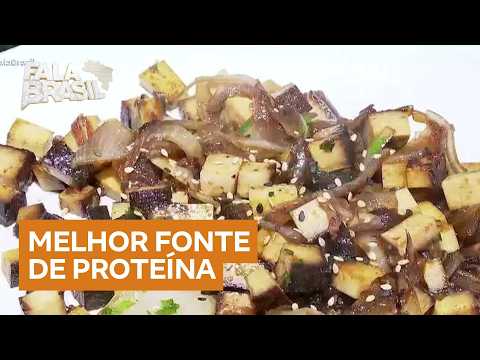
Tofu has little flavor or smell of its own. Consequently, tofu can be used in both savory and sweet dishes, acting as a bland background for presenting the flavors of the other ingredients used. In order to flavor the tofu, it is often marinated in soy sauce, chillis, or sesame oil.[citation needed] A common cooking technique in many parts of East and Southeast Asia involves deep frying tofu in vegetable oil like sunflower or canola.
East Asia
Many Chinese tofu dishes such as jiācháng dòufu (家常豆腐) and mapo tofu (麻婆豆腐) may include meat. In Chinese cuisine, Dòuhuā (豆花) is served with toppings such as boiled peanuts, azuki beans, cooked oatmeal, tapioca, mung beans, or a syrup flavored with ginger or almond. During the summer, "dòuhuā" is served with crushed ice; in the winter, it is served warm. In many parts of China, fresh tofu is eaten with soy sauce or further flavored with katsuobushi shavings, century eggs (皮蛋 pídàn), and sesame seed oil. With the exception of the softest tofus, all forms of tofu can be fried. Thin and soft varieties of tofu are deep fried in oil until they are light and airy in their core 豆泡 dòupào, 豆腐泡 dòufupào, 油豆腐 yóudòufu, or 豆卜 dòubǔ in Chinese, literally "bean bubble", describing the shape of the fried tofu as a bubble.
Southeast Asia
Tofu is called tauhu in Malaysia and Singapore as well as tahu in Indonesia both from Hokkien tāu-hū; it is also known as taufu in Malaysia from Cantonese. Indonesia, Thailand, Malaysia, and the Philippines are major producers of tofu and have plants in many municipalities.[citation needed] Malaysian and Singaporean Indians use tofu in various dishes such as mee goreng, rojak, and pasembor. Peranakan cuisine often uses tofu, as in Penang curry noodles and laksa. Tofu puffs are common in a type of begedil known as tauhu begedil. In Indonesian markets, tofu is usually available in two forms: tahu putih or common white firm tofu; and tahu goreng or fried tofu that has developed a brown skin. Tofu is usually fried in palm oil. Although pre-fried tofu is often sold cold, it is seldom eaten directly and requires additional cooking.[citation needed]
Elsewhere
Generally, the firmer styles of tofu are used for kebabs, mock meats, and dishes requiring a consistency that holds together, while the softer styles can be used for desserts, soups, shakes, and sauces. Some people enjoy tofu made and prepared with chocolate and making it into pies and mousse along with other tofu desserts. This came about due to vegans and vegetarians avoiding the usage of items such as milk and eggs. Firm Western tofu types can be barbecued since they hold together on a barbecue grill. These types are usually marinated overnight as the marinade does not easily penetrate the entire block of tofu. (Techniques to increase the penetration of marinades include stabbing repeatedly with a fork or pressing out the initial water content either by hand or with a tofu press prior to marinating. Before pressing the tofu, it is sometimes frozen and thawed in order of creating a more porous texture, often compared to a sponge. This texture does not only help release the initial water content, but also allows for an altered mouthfeel and more absorbent structure. Typically, the tofu is frozen and thawed once, although some culinary experts recommend executing this technique twice for a stronger effect.) Grated firm Western tofu is sometimes used in conjunction with textured vegetable protein (TVP) as a meat substitute. Softer tofus are sometimes used as a dairy-free or low-calorie filler. Silken tofu may be used to replace cheese in certain dishes, such as lasagna. Tofu has also been fused into other cuisines in the West, for instance in Indian-style curries.
Imagem: avlxyz · BY-SA · Openverse
Raw regular tofu is 85% water, 8% protein, 2% carbohydrates, and 5% fat (table). In a reference amount of 100 g (3.5 oz), tofu supplies 76 calories, and is a rich source (20% or more of the Daily Value) of calcium, copper, iron, and manganese (table).
Imagem: avlxyz · BY-SA · Openverse
Tofu is made from soy milk which is a turbid colloid liquid/solution. Tofu structure is related to soy milk components, particularly colloid components such as protein particles and oil globules. Protein particle content increases with the increase of the globulin ratio in the soybeans. Tofu varieties ensue from adding coagulants at various concentrations.
Imagem: avlxyz · BY-SA · Openverse
The two main components of the soybean important in tofu making are the 11S component, containing glycinin, and the 7S subunit, containing hemagglutinins, lipoxygenases, b-amylase, and β-conglycinin. The major soy protein components, in the two fractions that make up 65–85% of the proteins in soybeans, include glycinin and β-conglycinin. The soybean protein consists of many different subunits, which are sensitive to heat, pH, and ionic strength and become unevenly distributed among soluble and particulate fractions due to hydrophilic and hydrophobic interaction because of the amino acid composition.: 73
Imagem: Puno3000 · BY-NC-ND · Openverse
In Western culture, references to tofu have been used as a pejorative shorthand against left wing and vegan ideologies. In 2018, US Republican Ted Cruz criticized Democrats for wanting Texas to become "just like California, right down to tofu and silicon and dyed hair". In 2022, British home secretary Suella Braverman attacked the "Guardian-reading, tofu-eating wokerati" in the British House of Commons, blaming them for obstructing the roads. In April 2025 Markus Söder, the head of the German Christian Social Union, said that Germany could now look forward to more Leberkäse—a kind of meatloaf—instead of "Tofu-mania".